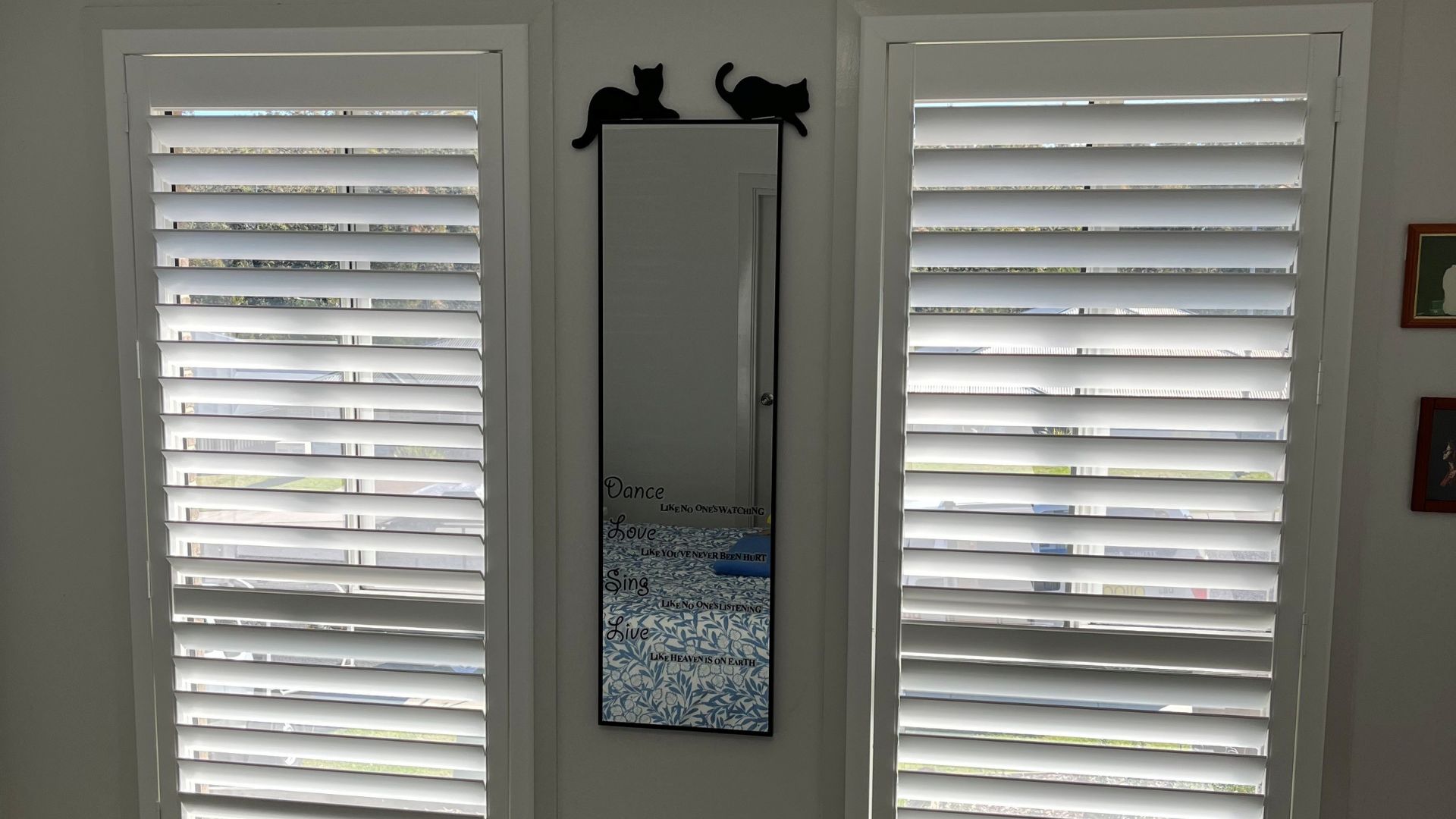
Plantation shutters vs blinds: key differences
A shutter is a permanent frame with hinged or sliding louvred panels. You tilt the louvres to steer light and air, or fold the panels back. A blind is a single covering that you raise, lower or tilt. That one difference shapes everything below.
Style
Shutters add architecture and suit Federation, Queenslander, coastal and modern homes alike. Blinds add colour, texture and pattern, and a new fabric changes the whole look. Apollo’s fabrics and materials catalogue lets you compare colours and finishes before you decide.
Durability
Shutters are the sturdier product. Apollo’s timber shutters use mortice and tenon joints, which are stronger than dowel and glue and less likely to separate with daily use. Blinds have cords, springs and fabric that wear sooner, and fabric fades in sunny rooms.
Maintenance
Shutter louvres wipe clean with a damp cloth and hold no dust or cooking smells. Aluminium and PVC Venetians wipe down too, but fabric rollers need spot cleaning and pleated or Roman styles need more care.
Light control and privacy
Louvres let you keep a room private and bright at the same time. A blockout roller gives total darkness, which shutters cannot do alone. Sheer and screen blinds trade privacy for a view.
Key point: if you need real darkness for sleep, pair shutters with a blockout blind or curtains. Shutters alone reduce light but do not eliminate it.
Cost and long-term value
The purchase price is only part of it. Compare the cost of buying, installing and replacing over the years you plan to stay.
Price and installation
Blinds cost less per window. Shutters cost more upfront but are built to outlast several sets of blinds. Apollo sells factory direct, with no third-party mark-ups, and its own team measures and installs. Price depends on window size, material and frame, so the reliable way to compare is a free in-home measure and quote.
Energy efficiency
In a UK whole-house test on single-glazed sash windows, well-fitting shutters cut heat loss by 64%, against 39% for heavy curtains (Historic England, 2017). Australian results will differ, but the mechanism is the same: a tight frame traps still air.
Slatted blinds do less in winter. A Canadian study found closed typical interior blinds can cut solar heat gain by 40 to 50% but have "no noticeable effect on heat loss" (National Research Council Canada, 2011). So blinds help most in summer.
Climate changes the priority. In Canberra, keeping winter heat in matters most. In Sydney and coastal NSW, keeping summer sun out matters more. YourHome notes that internal coverings are much less effective than stopping the sun before it reaches the glass, so a west-facing window benefits from an external awning.
Key point: the 64% figure is a UK single-glazed result, not an Australian guarantee. Use it to compare products, not to predict your savings.
Lifespan and property value
We found no independent Australian data on lifespan or resale uplift, so this post does not quote a percentage. A well-finished shutter is a feature buyers can see, which is a fair argument but not a measured one.
Pros and cons of plantation shutters
Advantages:
- Long lifespan and strong construction
- No pull cords
- Fine control of light, privacy and airflow
- Easy to wipe clean, and helps insulate when fitted tightly
Drawbacks:
- Higher upfront cost
- Cannot black out a room on their own
- Folded panels take up some wall space
- Very wide or unusual openings add cost
Pros and cons of blinds
Advantages:
- Lower upfront cost
- Wide choice of fabrics, colours and styles
- True blockout and screen options
- Fit almost any window and motorise easily
Drawbacks:
- Shorter lifespan, as fabric fades and mechanisms wear
- Corded styles carry a child safety risk
- Slatted styles do little for winter insulation
- Fabric and pleated types need more cleaning
Choosing the right window treatment
| Room | Best fit | Why |
|---|---|---|
| Living room | Shutters | Glare control without losing daylight |
| Main bedroom | Blockout blind, or shutters plus curtains | Darkness for sleep |
| Kids’ bedroom | Shutters or cordless blinds | No loose cords |
| Bathroom and laundry | PVC or composite shutters, or PVC blinds | Moisture resistance |
| Kitchen | Shutters or roller blinds | Wipe-clean, nothing hanging near the stove |
| Sliding doors | Track-mounted shutters or panel glide blinds | Wide opening, daily use |
Mixing is normal. Roller blinds in secondary rooms and shutters at the front of the house is a common split.
Materials
For shutters, PVC suits bathrooms, kitchens, laundries and busy family homes. Timber suits living rooms, bedrooms and feature windows. Composite balances warmth and durability, and aluminium handles patios, balconies and exposed windows.
For blinds, fabric is soft and varied, aluminium is cheap and durable, and timber or faux timber gives a warmer look. In humid rooms choose PVC, composite or aluminium, because natural timber and untreated fabric hold moisture. YourHome warns that condensation causes "damp, mould and rot".
Key point: a humid room needs a covering that tolerates moisture, whichever product you choose. Natural timber and untreated fabric are the weak points.
Motorisation
Apollo offers motorised window coverings for automated control. Motorising suits high windows, large openings and rooms where you want a schedule. See Apollo’s motorisation options and ask your consultant whether your chosen shutter or blind can be motorised.
Child safety and pets
Cords are the main risk. The ACCC investigated 21 deaths of children in Australia caused by corded internal window coverings between 1999 and 2018, with none known since 2014 (ACCC, 2019). The mandatory standard roughly halved the yearly rate, from 1.36 deaths to 0.67, and did not end it. A child can lose consciousness in as little as 15 seconds.
Key point: choose cordless or motorised blinds, and keep cots and beds away from windows. Plantation shutters tilt by a rod or hidden mechanism, so there is no pull cord.
Shutters also stand up to pets better. Cheap Venetian slats bend easily under claws.
Sliding doors and specialty windows
Large openings need planning because panel size, weight and track access all matter. Shutters can be configured for sliding doors and wide windows, corner and bay posts handle bay windows, and arched windows can take custom-shaped shutters. Panel glide blinds cope well with big glass but fit shaped windows less neatly.
Layering with curtains
Adding curtains behind shutters or blinds gives extra blockout, softness and another air layer. It pays off in bedrooms and cold-climate living rooms, and it is rarely needed where shutters already do the job.
Hybrid options
Some products sit between the two, such as Venetian blinds with wide timber-look slats. They copy the shutter look for less money but lack the frame, the tight fit and the cord-free operation. If you want the insulating fit of a shutter, a hybrid will not deliver it.
Frequently asked questions
I’m renovating our family home and can’t decide. Are plantation shutters actually better than blinds? It depends on the room. Shutters win on durability, insulation and cord-free safety. Blinds win on price, blockout and fabric choice. Most renovators use shutters in the main living areas and blinds in secondary rooms, so the higher cost goes where it earns its place.
Are plantation shutters worth the extra money if we plan to stay 10 years or more? Usually yes in the rooms you use every day. They last longer than most blinds and insulate better when fitted tightly, so you replace them less often. We found no independent Australian figure for resale uplift, so we don’t promise one. A free quote shows the real difference for your windows.
Which keeps the house warmer in winter and cooler in summer? Close-fitting shutters trap still air and do well in winter. Reflective blinds are strong at cutting summer sun. Windows can lose up to 40% of heating energy, so fit matters more than the product name. For west-facing glass, an external awning does more than any internal covering.
We have a toddler. What is the safest option? Plantation shutters have no pull cord. If you choose blinds, make them cordless or motorised. The ACCC recommends cordless alternatives to corded products, and most child deaths involved toddlers in bedrooms.
Can shutters go in a bathroom or laundry? Yes, in PVC or composite. Avoid natural timber in steamy rooms.
Do shutters block light completely? No. They reduce light and control glare well, but a bedroom needing darkness should add a blockout blind or curtains.
I manage a rental. Which is more practical? Blinds usually suit rentals better because they cost less and are quicker to replace. Choose cordless styles to reduce risk.
Can shutters fit sliding doors and big windows? Yes, with the right track and panel layout. Ask for advice at the measure, because weight and access change the design.
Can I mix shutters and blinds in one house? Yes. Keep colours and finishes consistent so the rooms look like one scheme from the street.
How do I get a price and who installs it? Book a free measure and quote. Apollo’s trained team measures and installs across NSW and the ACT, including Sydney, and backs its products with a warranty.
Next step
Apollo Blinds has made window coverings since 1988 and manufactures most of its products in Australia. Book a free measure and quote and compare shutters and blinds in your own home.
Sources
| Claim | Source | Year |
|---|---|---|
| Up to 40% heating energy lost, up to 87% heat gained; snug coverings with pelmets trap still air; condensation causes damp, mould, rot | YourHome, Glazing and Condensation | 2023, 2026 |
| Shutters cut heat loss 64% vs 39% for heavy curtains (UK, single glazed) | Historic England research | 2017 |
| Closed typical blinds cut solar gain 40 to 50%, no noticeable effect on heat loss | NRC Canada CTU 77 | 2011 (over 5 years old) |
| 21 child deaths 1999 to 2018, rate 1.36 to 0.67 a year, 15 seconds | ACCC consultation paper | 2019 (over 5 years old) |